
Reclaiming the Narrative: The 3-Pillar Reputation Recovery Blueprint for Schools and Nonprofits
In my 25 years of directing public relations for nonprofits, public districts, charter networks, and private schools, I have seen every type of crisis. Whether a reputational blow originates from an internal misstep or an external attack, the feeling in the executive suite is the same: panic, frustration, and a sense of lost control.
But a damaged reputation is not a permanent condition. It is a deficit in your “goodwill bank account” that must be systematically replenished. To recover, you cannot simply go quiet and wait for the storm to pass. You must aggressively and strategically reclaim your narrative.
Recovering public trust requires a well-designed, 12-month campaign that weaves together three critical components: Earned News Media, Strategic Social Media, and Owned Website Storytelling. Done correctly, you will begin seeing a measurable shift in public sentiment within the first 30 to 90 days.
Pillar 1: The Power of News Media
Many senior leaders make the mistake of waiting for “major” news before inviting the press. When rebuilding a reputation, you must pitch everything. A school talent show, a small $500 check donation ceremony, a student art exhibit, or a volunteer clean-up day—these are your golden tickets.
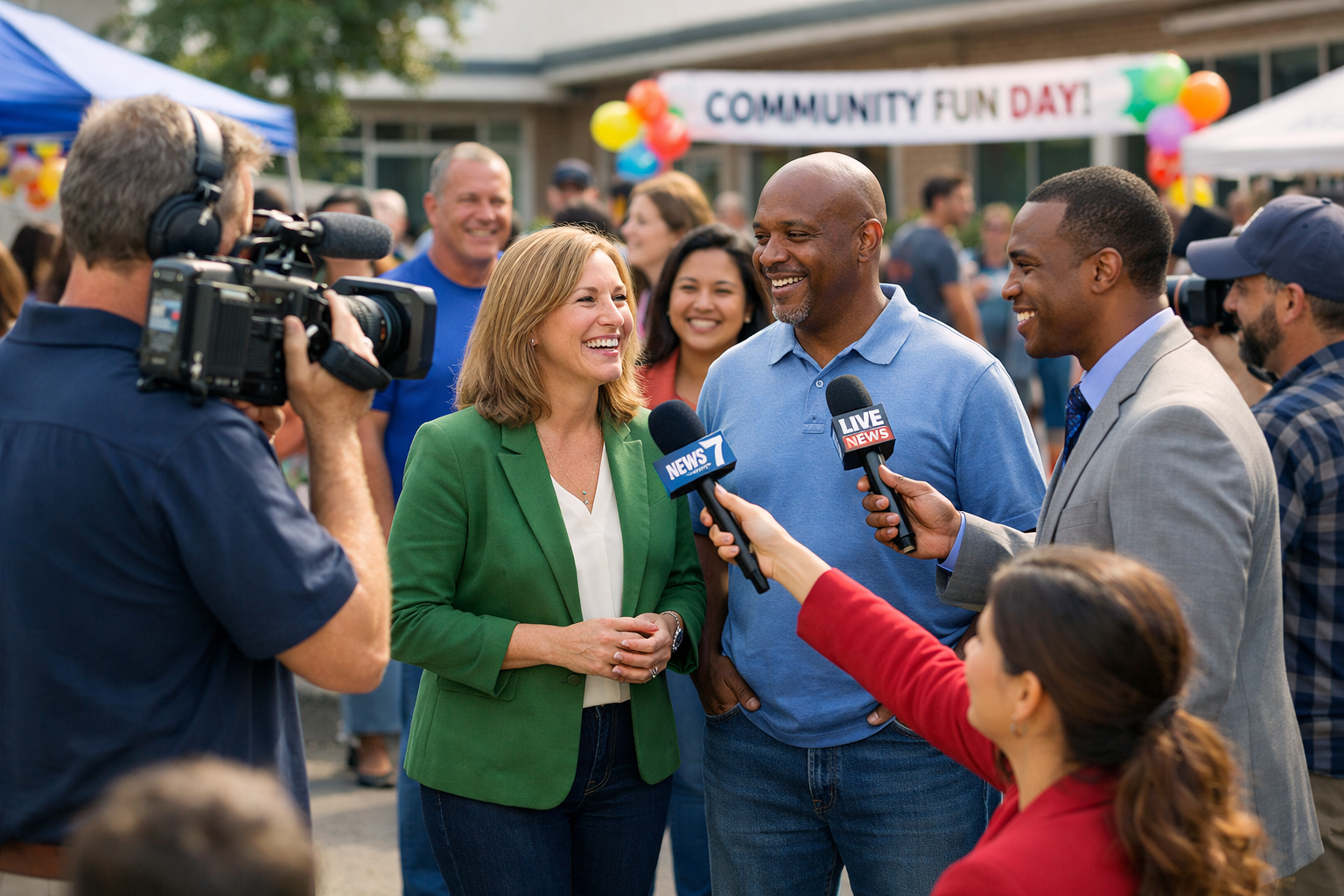
Broadcast media is essential because it delivers powerful, emotional visuals. When the community sees smiling children, engaged parents, and dedicated staff on their local evening news, it creates a subconscious halo effect. Furthermore, anything broadcast on television or radio is almost always promoted online by the stations themselves, giving you highly credible links to share.
Do not underestimate print media. A compelling front-page photo with a well-crafted caption often attracts significantly more attention than a 1,000-word article. A local newspaper capturing a candid moment of joy at your nonprofit’s food drive provides tangible proof of your positive impact.
Key Takeaway: The “Irrelevant” Good News
Do not worry if the event directly relates to your core mission or the recent crisis. The goal is to drill a positive feeling about your organization into the public’s mind. Frequent, lighthearted, and positive media hits drown out legacy negativity.
Pillar 2: Strategic Social Media Engagement
Social media is not a bulletin board; it is a town square. When navigating a reputational hit, your social channels are where you take the temperature of the community. You must carefully and strategically post student or member events, focusing on outcomes, joy, and community connection.
Engagement is non-negotiable. You must actively participate in conversations and pay close attention to what people say in the comments. Acknowledging concerns respectfully while immediately pivoting back to positive community impact shows that your leadership is both listening and moving forward.
Consider a regional charter school network that recently faced severe, coordinated rumors about financial mismanagement and staff turnover. Rather than fighting the rumors directly online, they launched a “Student Innovator of the Week” social media campaign. By flooding their feeds with undeniable stories of student success and teacher dedication, they shifted the community conversation away from the boardroom and back to the classroom.
Pillar 3: Absolute Control via Your Blog and Website
While news media provides third-party credibility, your website is the only place where you have absolute, unfiltered control of your narrative. Your blog and website must become a publishing house for your organization’s triumphs.
One of the most effective strategies is the “Selfie Testimonial” campaign. Ask teachers, volunteers, parents, or beneficiaries to record short, raw 30-second videos on their phones explaining why they love the organization. These videos feel authentic, unpolished, and deeply trustworthy.
Turn these testimonials into blog posts. Transcribe the quotes, add high-quality photos, post them on your website, and then proliferate these links across all your social media channels. You are creating an ecosystem where your owned content fuels your social engagement.
Fresh Storytelling Ideas for Your Website
- The “Where Are They Now?” Series: Track down alumni or past beneficiaries. Profiling their long-term success provides irrefutable proof of your organization’s lasting value.
- Behind-the-Scenes Transparency: Publish photo essays showing the kitchen staff prepping meals, facilities teams fixing up the campus, or volunteers organizing logistics. It humanizes your workforce and builds profound trust.
- Community Partner Spotlights: Write blogs praising local businesses or other nonprofits that work with you. They will share the post to their audiences, instantly expanding your positive reach.
The Campaign: Weaving the Blueprint Together
To make this work, you cannot execute these tactics in silos. You need a synchronized strategy that leverages each platform to support the others. Here is how you structure the timeline to guarantee results.
First, secure the base. In the first 30 days, focus heavily on your Owned Media. Launch the selfie testimonial campaign and publish your first batch of positive blogs. Ensure your website is a fortress of good news so that when the media or public searches for you, they find your narrative first.
Next, initiate the feel-good blitz. From days 31 to 90, begin aggressively pitching local news media with your micro-events—the talent shows and check donations. When the news covers it, capture that broadcast link or print photo.
Finally, activate the flywheel. Take the news coverage you earned and write a blog post about the experience on your website. Take that blog post and share it across all your social media channels, engaging with everyone who comments.
A damaged reputation is simply an opportunity to build a stronger, more resilient communication strategy. By committing to this year-long blueprint, you will not just recover your public standing—you will establish your school or nonprofit as a beloved, untouchable pillar of the community.